
How to Prepare Your Adult Child with a Disability for Independent Living
If you're the parent of an adult child with an intellectual or developmental disability (IDD), the idea of them moving out of your home probably stirs up a complicated mix of emotions. You want them to grow. You want them to have their own life, their own space, their own routines. But the worry is real, and it doesn't go away just because you know, logically, that this is the right next step.
You're not alone in feeling that way. The transition from the family home to independent living is one of the biggest milestones families in the IDD community face, and it's completely normal for it to feel overwhelming. The good news is that you don't have to figure it all out at once, and your loved one doesn't need to be "perfectly ready" before they take this step.
This guide is here to help you think through the process, build skills gradually, and feel more confident about what comes next.
Independence Doesn't Mean Alone
Before anything else, it helps to reframe what independent living actually means. For many families, the phrase triggers images of their son or daughter being completely on their own, handling everything without help. That's not what this is.
Supported living means your loved one has a safety net. Depending on the model, they might live with a supportive roommate, receive regular visits from a support team, or both. The goal isn't to remove all support. It's to shift from family-provided support to a structure that encourages growth, autonomy, and community, while still keeping people safe.
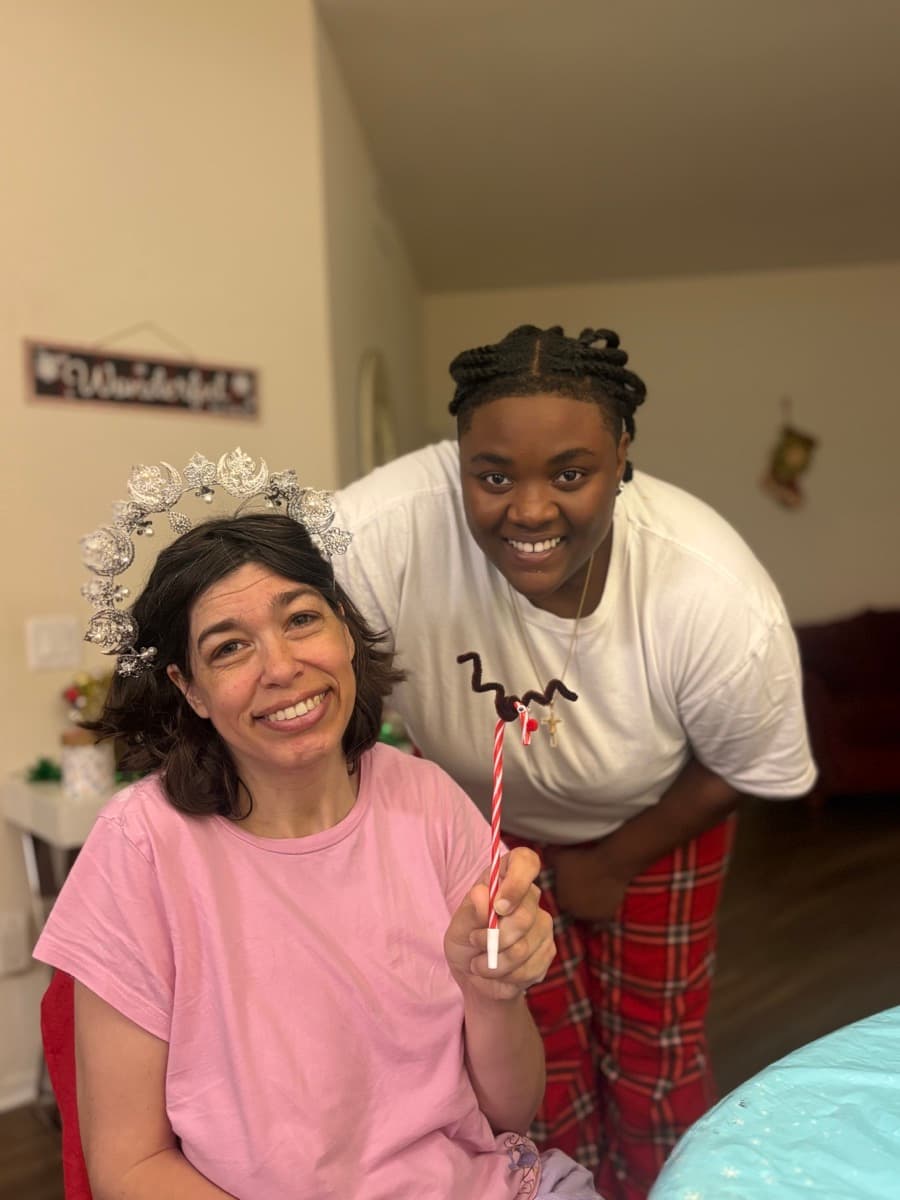
Life-sharing, in particular, offers a middle path that many families find reassuring: your adult child lives with a compatible roommate who provides day-to-day support, companionship, and encouragement. It's not a facility. It's not being alone. It's a real home, shared with someone who genuinely cares.
Daily Living Skills to Start Building Now
You don't need to wait for a move-out date to start preparing. In fact, the best preparation happens at home, over time, in low-pressure moments. Here are the core areas to focus on:
Personal care and hygiene. Can your adult child manage their own bathing, grooming, and dressing routines? If they need reminders or visual schedules, that's okay. The goal is building habits, not perfection.
Basic cooking and meal planning. Start simple. Making a sandwich, heating up leftovers, following a two- or three-step recipe. Over time, work toward planning a few meals for the week and making a grocery list together.
Laundry and household chores. Sorting clothes, running the washer and dryer, wiping down counters, taking out the trash. These are learnable skills, and practicing them at home now makes a huge difference later.
Money management basics. Even small steps matter here. Let them pay for something at a store, manage a small weekly allowance, or help you compare prices at the grocery store. Understanding that money is finite and that choices have tradeoffs is a foundational skill.
Getting around. Whether it's public transit, rideshare apps, or paratransit services, practice using transportation together before they need to do it alone. Start with familiar routes.
Communication. Can they make a phone call, send a text, or clearly express when something is wrong? Practice these in real-life situations. Role-playing can help, but real conversations are even better.
For a more detailed breakdown, our Independent Living Skills Checklist walks through each area step by step.
Social Readiness Matters Too
Skills like cooking and cleaning get a lot of attention, but social readiness is just as important, and sometimes harder to measure. Think about whether your adult child:
Is comfortable spending time with people who aren't family members
Can share a living space respectfully, including compromising on things like noise, shared chores, or what to watch on TV
Shows interest in building friendships or being part of a community
Has had some experience being away from home, whether that's summer camp, a respite stay, or even regular sleepovers with a trusted friend or relative
If some of these feel like a stretch right now, that's information, not a verdict. It tells you where to focus. Social skills grow with practice, and creating more opportunities for your adult child to be around peers is one of the most valuable things you can do.
Working with Your Regional Center
If your loved one is a Regional Center client in California, your service coordinator is one of your most important allies in planning this transition. Here's how to make the most of that relationship:
Bring up supported living services (SLS) early. Don't wait until you're ready to move. These conversations take time, and it helps your coordinator plan ahead.
Request an assessment of support needs. This will determine how many hours of support your loved one qualifies for and what services can be funded.
Ask about life-sharing specifically. Not all coordinators are familiar with every option. Life-sharing is a supported living model where your loved one is matched with a compatible roommate. It's funded through Regional Center and offers a level of daily support that many families find ideal.
Understand the funding. Regional Center can fund support hours, but the details vary by person. Your coordinator can walk you through what's covered and how the process works.
If you want to learn more about how life-sharing works through a Regional Center, our how it works page breaks down the process. For a broader look at all the housing-related services Regional Centers fund, read our family guide to Regional Center services.
Signs Your Loved One May Be Ready
Readiness isn't a checklist you pass or fail. It's a spectrum. But there are some encouraging signs that your adult child might be ready to start the transition:
They've expressed interest in living on their own, even casually. Comments like "I want my own room" or "When can I have my own place?" are worth paying attention to.
They have some daily living skills, even if they still need support in certain areas. Nobody moves out fully prepared for everything.
They can be left alone safely for a few hours. This doesn't mean all day, but it shows a baseline level of self-management.
They want to be part of a community. A desire to connect with others, whether through work, activities, or friendships, is a strong indicator of social readiness.
If your adult child is showing some of these signs, it may be time to start exploring options, even if the actual move is months or years away.
What You Can Do Right Now
You don't need to have everything figured out to start. Here are practical steps you can take today:
Practice independence at home. Give your adult child more ownership over daily tasks. Let them cook dinner once a week, do their own laundry, or manage a small budget for personal spending. Resist the urge to step in when things aren't done perfectly.
Try overnight stays away from home. This could be a weekend with a relative, a respite stay, or a short trip. These experiences build confidence and help you both see what works and what still needs practice.
Visit possible living arrangements. Seeing real homes, meeting real people, and asking questions can transform independent living from an abstract fear into something concrete and approachable. Our team is always happy to walk families through what a life-sharing arrangement looks like in practice.
Talk openly about it. Have honest conversations with your adult child about what independent living means, what excites them about it, and what worries them. Their input matters, and feeling included in the planning process makes the transition smoother for everyone.
How Life-Sharing Bridges the Gap
Many families feel stuck between two options that don't feel right: a group home setting that feels too institutional, or fully independent living that feels too risky. If you're weighing those two options, our SLS vs group homes comparison breaks down the differences in detail. Life-sharing offers a third path.
In a life-sharing arrangement, your adult child lives with a carefully matched roommate who provides support, companionship, and encouragement, all within a real home in the community. It's not a facility. There are no shift changes or rotating staff. It's two people sharing a home, building a genuine relationship, and growing together.
For families, this model provides peace of mind. Your loved one isn't alone, but they're also not in a setting that limits their autonomy. They're learning, socializing, and building a life that's truly their own, with someone by their side who's invested in their success.
If you're exploring options for your adult child and want to learn more, visit our Regional Center clients page to see how families are getting started, or check our FAQ for answers to the questions we hear most often. The transition to independent living doesn't happen overnight, but every step you take now is a step toward a fuller, more independent life for your loved one.
Ready to explore life-sharing?
Schedule a free 15-minute call to learn how Homies can help your family. No commitment, no pressure — just answers.